TV Licence Fee 2026 Explained
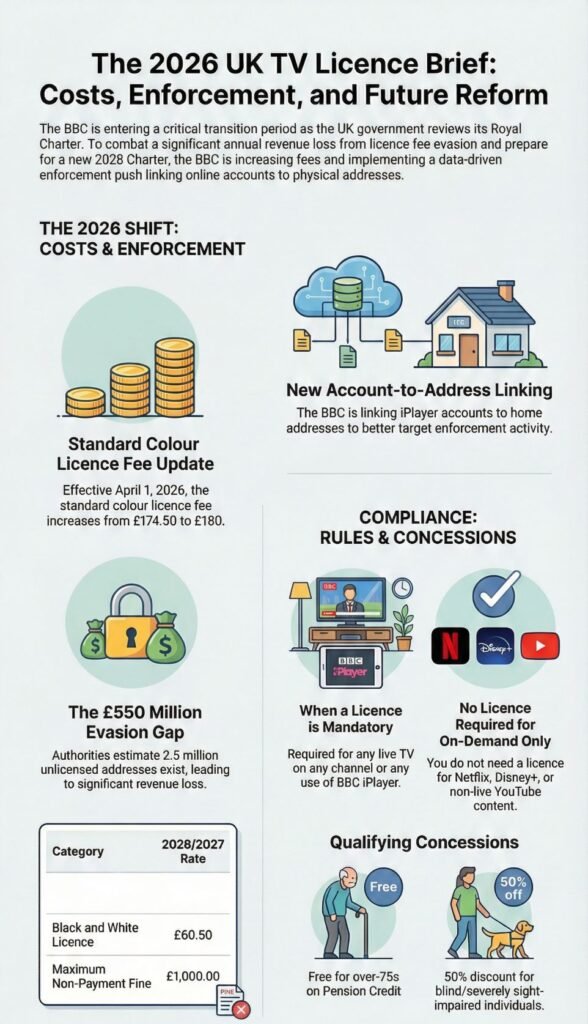
The TV licence fee is rising yet again. From 1 April 2026, the standard colour TV licence will cost £180 a year across the UK, up from £174.50. That is an extra £5.50 a year, or about 46p a month, for anyone who needs a licence.
Not every household actually needs to pay the TV licence fee. Some people can get it for free or at a discount, and others can cancel without breaking the law if they only watch certain kinds of TV. This guide walks you through what is changing, who must pay, who does not, and what to do if the fee is getting too hard to afford.
Key point: Before you pay or renew, it is worth checking whether you really need a TV licence at all.
The TV licence fee in 2026 at a glance
If you only want the basics, start here.
From 1 April 2026:
- Standard colour licence: £180 a year
- Black and white licence: £60.50 a year
- Increase: £5.50 on the colour licence compared with £174.50, a 3.14% inflation linked rise
- Covers: Watching or recording live TV on any channel, on any device, and using BBC iPlayer
You may not need a licence if:
- You never watch or record live TV on any channel.
- You do not use BBC iPlayer.
- You only watch on demand through services like Netflix and Disney+, as long as you do not watch live channels inside those apps.
Before you pay, use a transparent decision process. The quickest route is an interactive checker that walks you through your viewing habits and living situation, then tells you if you actually need to pay.
What is the TV licence fee and what does it pay for?
The TV licence fee is a mandatory charge for most UK households that watch live TV or use BBC iPlayer. It is not a subscription you can opt in or out of if you watch in ways that trigger the rules.
What the TV licence fee is
At its simplest, a TV licence is a legal permission to:
- Watch or record live TV on any channel.
- Watch or record live TV on any device.
- Use the BBC iPlayer service, including on demand.
You pay once per household, not per device, as long as everyone covered lives at the same address.
Why the TV licence fee exists
The TV licence is designed to fund public service broadcasting, mainly the BBC, as well as some services in Wales through S4C. The idea is that everyone who uses live TV or iPlayer pays into a shared pot, which then funds:
- BBC TV channels
- BBC radio
- BBC online services and apps
- Some additional public service content, such as S4C in Wales
Whether this model should continue is a live political debate, but for now, the TV licence fee remains the main way the BBC is funded.
Who sets the TV licence fee and how
The UK Government sets the fee, specifically the Department for Digital, Culture, Media and Sport (DCMS), through agreements with the BBC.
For 2026 to 2027, the government has confirmed that the TV licence fee will:
- Rise in line with the Consumer Prices Index (CPI), using a 3.14% uplift.
- Increase the standard colour licence to £180
- Increase the black and white licence to £60.50[BROADBAND NEWS]
These decisions are linked to the current BBC Royal Charter and funding settlement, which runs until the end of the decade.
How much is the TV licence fee now, and how is it changing?
This is the headline information most people are searching for.
The new TV licence fee from 1 April 2026
From 1 April 2026, the annual TV licence will cost:
| Colour licence | £174.50 | £180.00 | +£5.50 |
| Black and white | £58.50 (approx.) | £60.50 | +£2.00 |
Figures for 2026 to 27 are based on the CPI-linked settlement announced by the government. [ITV]
When the new fee kicks in
- If your licence renews on or after 1 April 2026, you will pay the new rates.
- If your licence runs out before 1 April 2026, you pay current prices for that period.
- If you pay by instalments, your payment plan may be adjusted so that the total you pay over the year matches the new annual amount.
Check your renewal date. Two neighbours can pay different amounts in the same calendar year, depending on when their licence period starts.
How the increase was decided
The increase is based on a 3.14% CPI uplift, applied as part of a settlement agreed between the government and the BBC.
In plain English:
- The fee was frozen for a period.
- It then moved to a linked-to-inflation system.
- Each year, the fee is adjusted within that framework.
How the 2026 fee compares with recent years
You do not need every historic figure, but it helps to know the direction of travel:
- Fees were frozen for several years while inflation rose.
- The 2025 licence went up to £174.50.
- The 2026 licence costs £180.00.
The pattern is small annual increases that still feel painful, even as every other bill is also rising.
Who actually needs a TV licence in 2026?
This is where things get confusing. The rules focus on how you watch, not which device you own.
Live TV on any channel, any device
You need a TV licence if you:
- Watch live TV on any channel, for example, BBC, ITV, Channel 4, Sky, and sports channels.
- Watch live TV on any platform, including Freeview, satellite, cable, or streaming apps that carry live channels.
- Record live TV to watch later.
It does not matter if you use:
- A traditional TV
- A laptop or desktop
- A phone or tablet
- A games console
If it is live, you need a licence.
BBC iPlayer
You also need a TV licence if you use BBC iPlayer, even if you never watch live TV. That includes:
- Watching BBC programmes on demand
- Downloading programmes to watch later in the iPlayer app
- Using iPlayer on any device
The iPlayer rule catches some people who think they are “on demand only” but still use BBC content.
Streaming services like Netflix, Disney+, Amazon Prime and YouTube
This is where many people can save money.
You do not usually need a TV licence if you:
- Only watch on demand through services such as Netflix, Disney+, Amazon Prime Video, Now, Apple TV+, or
- Only watch on-demand YouTube videos, and
- Never watch live channels or live streams on any of these platforms.
You do need a licence if you:
- Watch a live TV channel inside a streaming app, for example, a live sports channel streamed through a smart TV or box.
- Watch a live stream on YouTube or similar platforms that is treated as a TV programme, not just random clips.
When in doubt, ask a single question:
“Am I watching it at the same time as a normal TV broadcast?”
If yes, you almost certainly need a licence.
Catch up and on demand on non-BBC services.
For services like ITVX, Channel 4, or My5:
- Watching catch-up or on-demand only, with no live channels, usually does not require a licence.
- The rule changes if you switch to live TV inside any of those apps.
So one person might safely cancel their licence because they stick strictly to on demand, while a friend using the same apps but watching live schedules would still need to pay.
Shared houses, lodgers and flatmates
In a typical shared house:
- One standard TV licence usually covers all residents, as long as they:
- Live at the same address.
- Have a single joint or shared tenancy, or
- Form one household in practice.
You may need separate licences if:
- Lodgers or flatmates have separate tenancy agreements and watch TV in self-contained areas.
- There are annexes or separate flats with independent front doors.
If you live in a house share, clarify:
- Are you on one joint contract or separate ones?
- Do you watch TV mainly in communal areas or in separate units behind locked doors?
Students in halls or shared student houses
For students in halls of residence:
- An institutional licence may cover TVs in some communal areas.
- You often need your own licence if you watch TV in your room on your own device, especially if it is plugged into the mains rather than battery only.
For students in private shared houses:
- The same rules as any shared house apply.
- A single licence usually covers the whole property if it is one household and one tenancy.
Universities often publish their own TV licence guidance for halls. It is worth checking their rules as well as the general ones.
Second homes, holiday lets and caravans.
You may need more than one licence if you:
- Own a second home where people watch live TV, or
- Run a holiday let or Airbnb that provides live TV to guests, or
- Use a caravan or boat as a second residence with TV equipment.
Sometimes your main home licence covers you if you only ever use one device at a time, and it runs on its own internal battery. As soon as you install mains-powered equipment permanently in more than one place, extra licences are likely.
Businesses, pubs and communal areas
For business premises:
- Pubs, clubs, shops, offices and similar places need separate business TV licences if they show live TV.
- The rules differ from those for household licences, and the costs vary.
If you run a business and show TV to customers or staff, check the specific licensing rules for your business.
Who can get a free or discounted TV licence?
Not everyone has to pay the full £180. Several groups can get free or discounted licences.
Over 75s on Pension Credit
People aged 75 or over can get a free TV licence if:
- They receive Pension Credit, and
- The licence is in the name of the person receiving Pension Credit, or another person in the same household who is also eligible.
Key points:
- Being over 75 on its own is not enough.
- You need to claim Pension Credit and be accepted for it.
- If you care for an older relative, it is worth checking whether they qualify.
People who are blind or severely sight-impaired
If you are blind or severely sight-impaired, you may qualify for a reduced fee TV licence.
In practice, this means paying a percentage of the full fee and providing official documents to verify your status. The reduction applies to the household licence, not just one person.
Care homes, sheltered housing and similar schemes
Residents in:
- Care homes
- Some forms of supported housing
- Certain sheltered schemes
may be covered by special licence arrangements that reduce or remove the individual cost. Often, the organisation holds a licence and individual residents do not need their own.
If you or a relative lives in any managed accommodation, ask the manager or warden:
- Is there a communal TV licence?
- Do residents need their own licences in their rooms?
Other concessions and schemes
There can be other concessionary arrangements, for example:
- Licences for people over a certain age in specific types of accommodation
- Institutional licences for organisations providing supported living
The safest approach is to check the official TV Licensing or GOV.UK information, because the details change more often than the headline fee.
How to check if you or a relative qualify
To see if someone qualifies for a free or reduced licence:
- Gather basic details:
- Age
- Benefits received, especially Pension Credit
- Type of accommodation
- Check official guidance on:
- Free over 75 licences
- Blind concessions
- Care home licences
- Contact TV Licensing or a trusted advice service if you are unsure.
If you discover that someone has been paying when they could have had a concession, there may be a chance to adjust future payments and, in some cases, seek partial refunds.
Help if you are struggling to pay the TV licence fee.
For many households, an extra £5.50 a year feels more serious than the number suggests.
Spreading the cost over the year
You do not have to pay £180 in one lump sum. TV Licensing offers ways to spread the cost, for example:
- Monthly direct debit
- Quarterly payments, which can include a small surcharge
- Weekly or fortnightly payments using payment cards or other methods
Spreading the cost helps cash flow, but keep an eye on the total paid, especially if there are any extra fees for specific schedules.
The Simple Payment Plan for people in financial difficulty
The Simple Payment Plan is designed for people who struggle to pay the licence fee in standard ways.[GB NEWS]
It typically allows:
- Smaller, more frequent instalments
- A structure that helps avoid building up arrears
- More flexible handling for people who have already fallen behind
Eligibility rules apply. It usually targets people in genuine financial difficulty or those referred by debt advice organisations.
Talking to TV Licensing before you fall behind
If you know you will struggle to make a payment, it is better to:
- Contact TV Licensing early.
- Explain your situation honestly.
- Ask about changing payment plans or accessing the Simple Payment Plan.
This does not guarantee a specific outcome, but it reduces the risk of enforcement escalating quickly.
Getting wider money help
If the TV licence fee is only one of many bills you are falling behind on, consider:
- Talking to a free debt advice charity
- Checking you are getting all the benefits you qualify for, including Pension Credit if you are older.
- Looking at your whole budget, not just this one bill
TV licence rules matter, but they sit inside the bigger picture of your household finances.
How to cancel your TV licence and get a refund
If you do not actually need a licence, you should not pay for one. That includes people who:
- No longer watch any live TV.
- Have stopped using BBC iPlayer
- Have moved into an accommodation where the TV is already covered
When you can legally cancel your TV licence
You can usually cancel if:
- You no longer watch or record live TV on any channel, and
- You do not use BBC iPlayer at all, and
- No one in your household uses devices in a way that triggers the rules.
You can also cancel if:
- You have moved to a home that is already covered.
- The licence is no longer needed because the licence holder has died.
- Your circumstances have changed, so a free or concessionary licence now applies instead.
How to tell TV Licensing you no longer need a licence.
You can contact TV Licensing:
- Online, by filling out a form to say you do not need a licence
- By phone, speaking to a customer service adviser
- By post, writing to the address on their official letters
Be clear and specific. For example:
“From 1 March 2026, I no longer watch or record live TV on any channel, and I do not use BBC iPlayer. I only watch on demand through Netflix and Disney+.”
Keep a copy of any confirmation you receive for your records.
How TV licence refunds work
You can usually request a refund if:
- You have at least one whole unused month left on your current licence, and
- You can show that you no longer need the licence for that remaining period.
Refunds are usually based on the unused months, not the whole year. The money is usually sent:
- Back to the account that paid
- Or by cheque or another method agreed with TV Licensing.
What to expect after you cancel
After cancelling, you might:
- Receive letters asking you to confirm that you still do not need a licence.
- Please receive a visit to check the situation at your address.
As long as you are not watching live TV or using iPlayer, and you have clearly told TV Licensing, you should remain within the rules. If your viewing habits change, you must buy a new licence before you start watching live TV or iPlayer again.
What happens if you do not pay when you should?
People worry about TV licence enforcement, sometimes more than the facts justify.
How TV Licensing enforces the rules
TV Licensing uses a mix of:
- Letters
- Phone calls
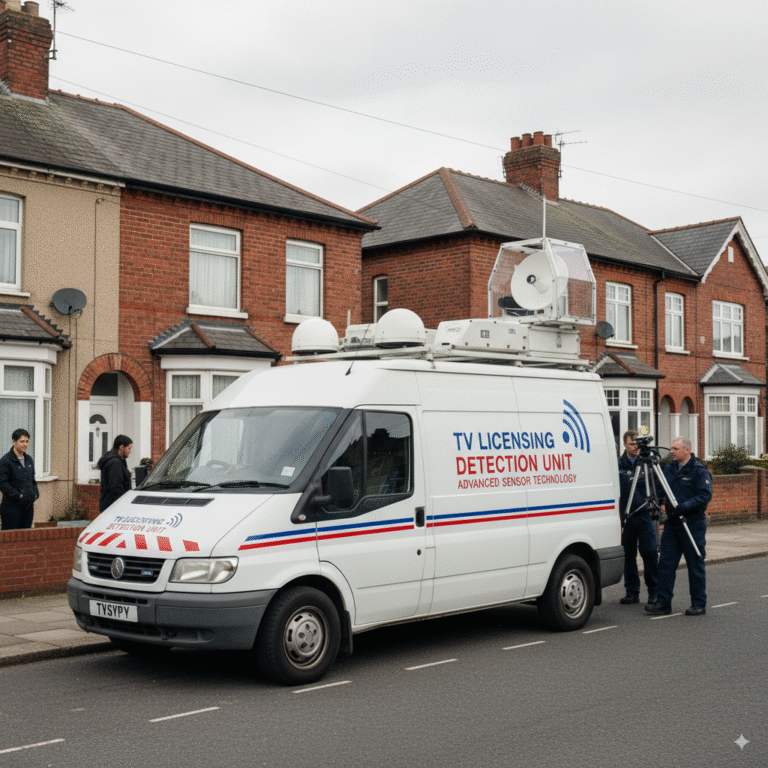
- Home visits by enquiry officers
Technology and data matching are playing an increasingly important role, especially in discussions about linking iPlayer accounts and licence records. The exact technical methods are not fully public, but the message is simple. If you are watching in a way that needs a licence, the system is designed so that you should have one. [GB News]
Fines and court action
If you watch TV in ways that need a licence and refuse to pay, you risk:
- A fine imposed by a magistrates’ court
- A possible criminal record for TV licence evasion
The level of enforcement and approach can vary across the UK, and reforms are sometimes debated, but non-payment remains a legal issue.
Avoiding problems by being clear on your status
The safest way to avoid problems is to be clear and consistent:
- If you need a licence, pay for one on time, using a payment plan that works for you.
- If you do not need a licence, tell TV Licensing, keep records and make sure everyone in the home understands the rules.
Uncertainty is where stress builds. A clear decision either way is better than hoping letters stop.
The future of the TV licence fee after 2026
There is intense debate about whether the TV licence fee should survive in its current form.
The 2026 to 27 settlement and what it means
The confirmed fee of £180 for 2026 to 27 is part of a broader settlement that:
- Links the fee to CPI inflation
- Seeks to give the BBC a more stable income for a few years
- Leaves bigger decisions to future reviews and governments [The Guardian]
In short, the fee is not disappearing overnight, but it is no longer untouchable.
Ongoing reviews of BBC funding
The government and industry are exploring:
- Replacing the licence fee with general taxation
- Moving to subscription or hybrid models
- Charging different fees for different levels of use
- Reforming enforcement and penalties[Guardian]
None of these options is the agreed policy yet. For now, the TV licence fee remains in place.
What could change for households in the future?
Possible outcomes in the next decade include:
- The licence fee continues with tweaks.
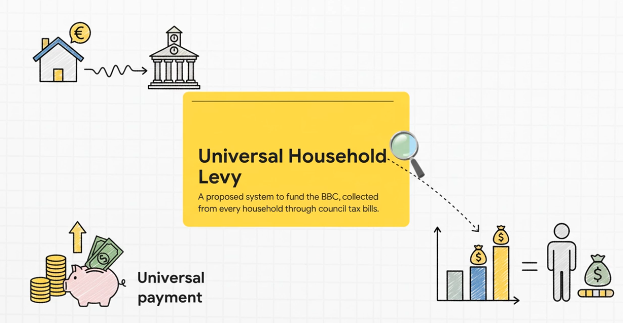
- A new household broadcasting charge collected with council tax or other bills
- A more profound shift to subscription-style models
For ordinary households, the practical takeaway is simple. Rules may change, but the changes will be announced in advance. Checking a trusted, regularly updated guide before you pay is the low-stress way to stay on top of it.
Quick TV licence fee FAQs for 2026
How much will the TV licence fee be from April 2026?
From 1 April 2026, the standard colour TV licence will cost £180 a year across the UK. The black-and-white licence will cost £60.50 a year.[ITV]
Is the TV licence fee different in England, Scotland, Wales or Northern Ireland?
The headline fee is the same £180 colour licence and £60.50 black-and-white licence across all four nations. Some aspects of enforcement and wider broadcasting policy differ, but the basic amount is the same across the UK.
Do I need a TV licence if I only watch Netflix or Disney+?
If you only watch on demand through Netflix, Disney+, Prime Video and similar services, and you never watch any live TV channel or BBC iPlayer, you generally do not need a TV licence. If you switch to live channels or live sports streams inside these apps, you almost certainly do.
Do over-75s get a free TV licence in 2026?
Only over-75s who receive Pension Credit qualify for a free TV licence. Being over 75 on its own is no longer enough. The licence must be in the name of a qualifying person in the household.[Express]
Can I pause my TV licence if I go abroad?
If you will not be using TV services that require a licence for a period and you have at least one whole unused month left on your licence, you may be able to cancel and request a refund for the unused months. If you return and start watching again, you must buy a new licence.
Will the TV licence fee keep rising every year?
Under the current settlement, the fee is linked to inflation, so further increases are possible. However, the whole funding model is under review, so bigger changes are also possible in future years. [The Guardian]
Conclusion: check if you really need to pay the TV licence fee
The TV licence fee will rise to £180 a year from 1 April 2026. Many households will see this as another unavoidable bill. Yet not everyone actually needs a licence, and some people can get it free or at a reduced rate.
If you:
- Never watch live TV,
- Do not use BBC iPlayer, or
- If you may qualify for Pension Credit or other concessions, then you should check your position carefully before paying for a TV Licence checker.